Photo Generator from Reference Image: How It Works
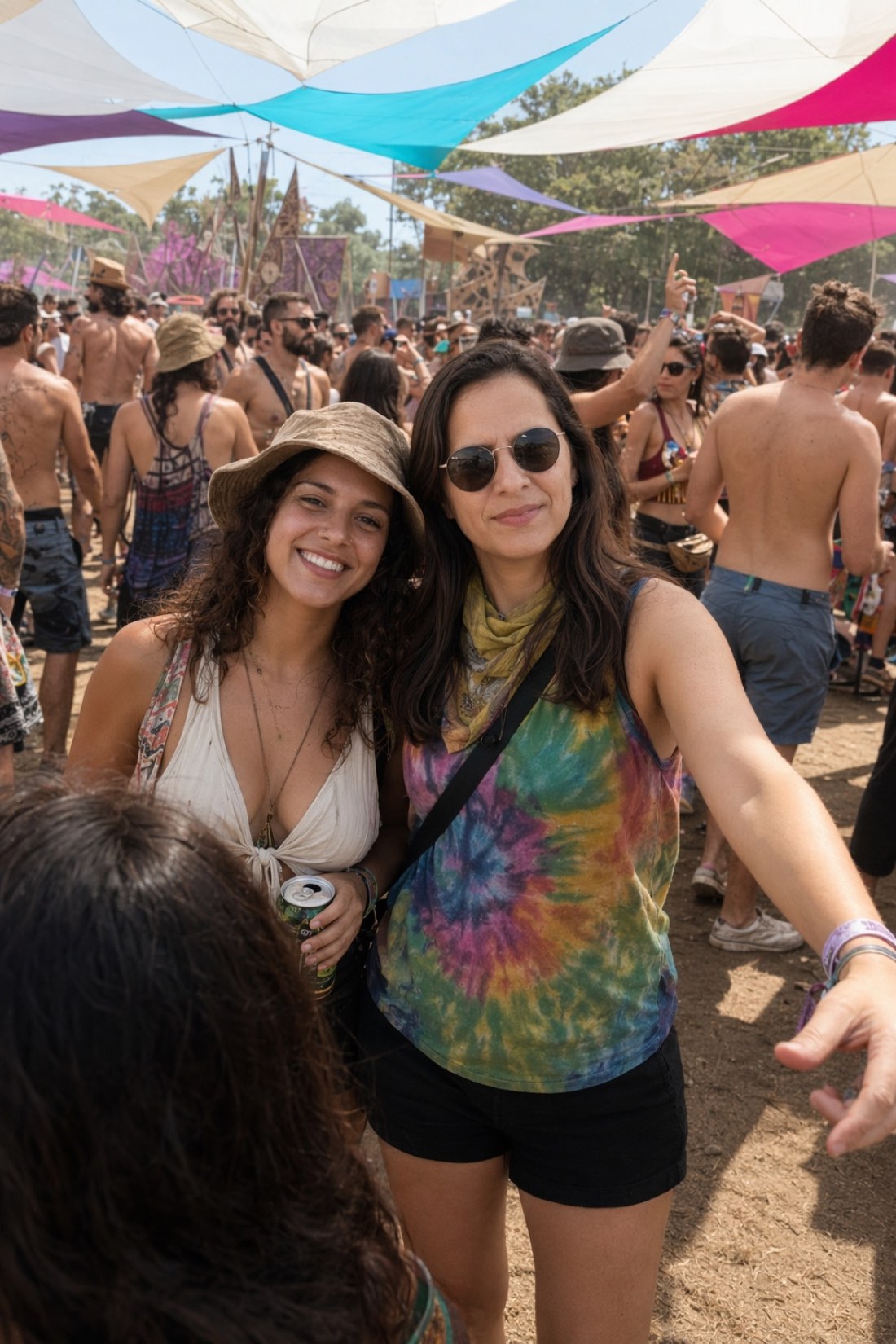
Every AI photo tool has one input that outweighs everything else, and it is not the scene, the style, or the settings. It is the reference images: the photos of you that the generator learns from. They are the answer to the only question that matters, which is who appears in the picture.
Here is how references actually work, what makes a good set, and the input mistakes that quietly ruin every output downstream.
References are the identity; scenes are wardrobe
Think of the system in two halves. The scene, a festival, a café, a coastline, is a stage the generator can build endlessly. The reference images are the person cast in it. The generator extracts your facial geometry, proportions, and look from the references, then renders that identity inside whatever stage you pick.
The cleanest proof is one stage, two casts. The same festival, generated twice from two different people's reference sets:
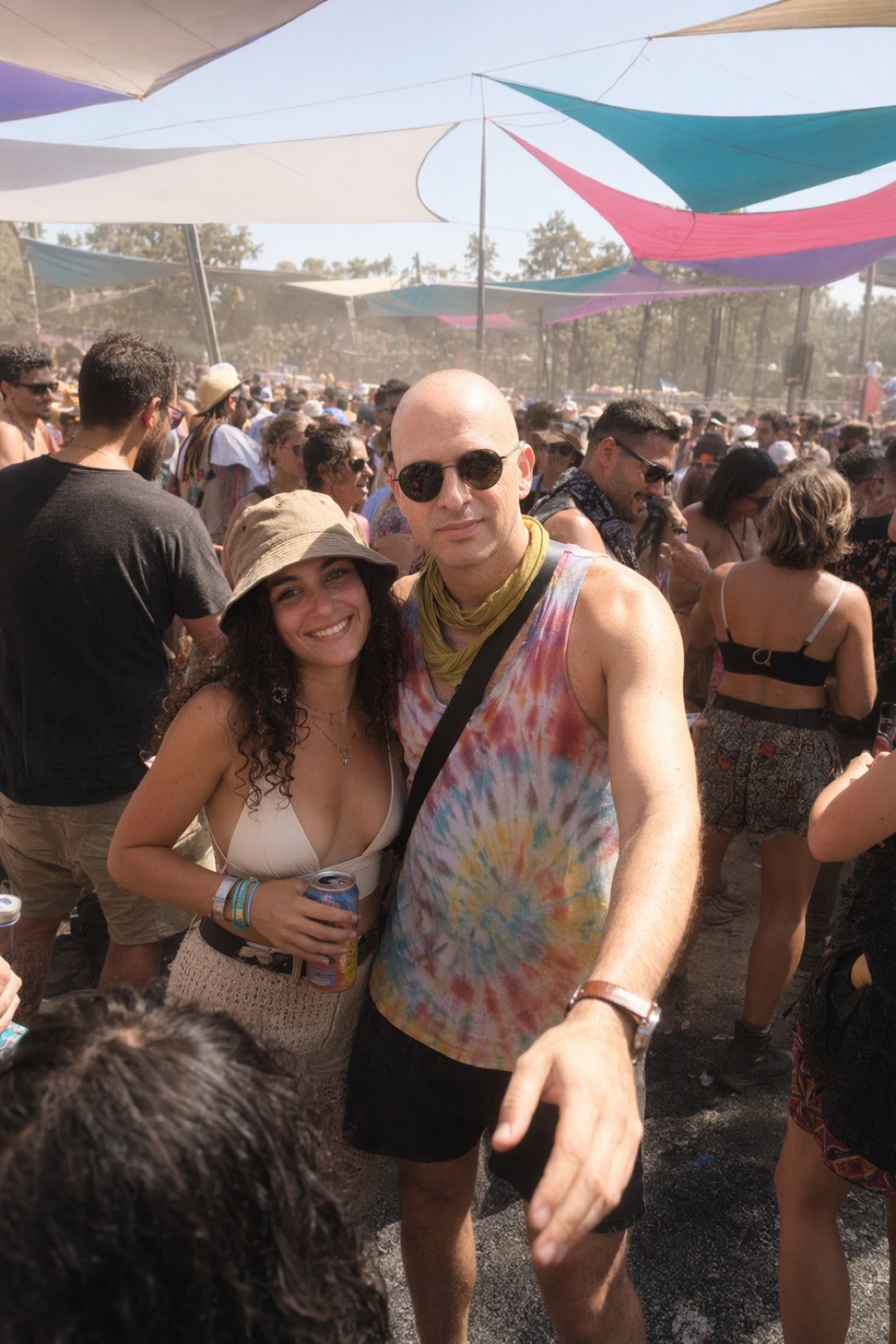
Same canopies, same crowd, same afternoon. The only variable that changed between the hero image and this one is the set of reference photos, and that variable is the entire product.
What the generator reads from your references
From a good reference set, the system extracts what makes you recognizable: face structure, eye spacing, nose, jaw, head shape, your natural asymmetry, skin tone, and your build. That extracted identity is what stays fixed across every scene, which is why reference quality controls all results at once. Details on what preservation involves live in how AI preserves faces and proportions.
The corollary: the generator can only preserve what your references actually contain. Distorted input produces faithfully distorted output.
Building a good reference set
The recipe is short:
- Several photos, not one. Different angles let the generator triangulate your real geometry instead of guessing from a single viewpoint.
- Normal distance. Photos other people took of you, waist-up or wider, are ideal. Arm's-length selfies warp proportions through lens perspective, the single most common input mistake.
- Good, even light with your full face visible. No sunglasses, no hat shadows.
- Recent and unfiltered. A face-tuned reference hands the generator someone else's geometry with your name on it.
- Backgrounds are irrelevant. Kitchen, office, car; only you in the frame matters.
Notice what is not required: professional photos, nice locations, or a good camera. The bar is honest geometry, not production value.
From references to results
With CMeIn the workflow is exactly this shape:
- Upload your reference set once.
- Pick scenes: dating, travel, social, professional, everyday.
- Generate. Every output carries the identity your references defined, rendered candidly inside the scene.
One good reference set powers everything: a full photo pack, a profile refresh, travel content. When your look changes, a haircut, a beard, a few years, refresh the references and the whole pipeline updates.
Start with the photos you already have
Your camera roll almost certainly contains a good reference set already: the photos other people took of you.
- See what reference-driven results look like in the public examples.
- Then check the credit packs and upload your set.
Related reading: How to Create AI Photos of Yourself, AI Photo Generator From Selfie.