AI Headshot Generators That Keep Your Real Face: 7 Compared (2026)
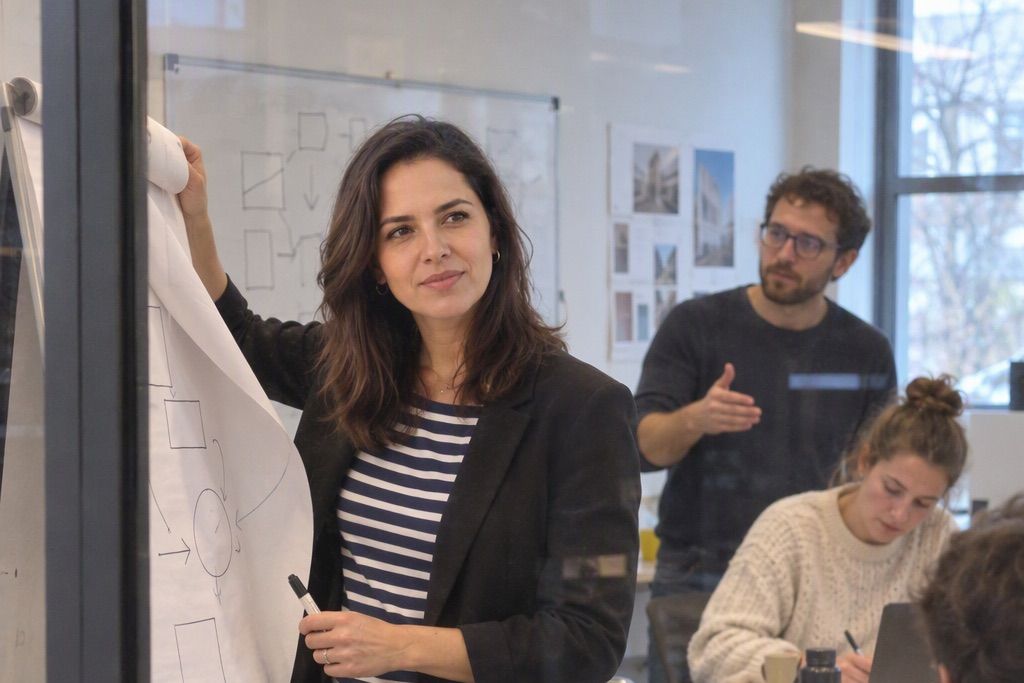
Short answer: no AI headshot generator is built to keep your face. Every one of them is built to make a good portrait, and a good portrait is a little more symmetric, a little smoother and a little more frontal than the person in it. The tools differ in how hard they fight that default and in what they promise when they lose. Below are seven, with every price read off the vendor's own page, and a ten-minute test that tells you which one held your face before you spend more than the entry price.
Every price below was read on 22 November 2026. Per-headshot figures are our arithmetic from the published tiers.
Disclosure: we make CMeIn, which is on this list. It gives one free headshot a day, so the cheapest way to check this article's argument is to run it on yourself.
The seven at a glance
| Tool | Entry price | Best per headshot | What it starts from | Refund or redo |
|---|---|---|---|---|
| CMeIn headshot | 1 free a day, then $2.99 for 2 | $1.31 at $20.99 for 16 | One photo, or your gallery when signed in | Refund if it does not look like you |
| StudioShot | $29.25 for 40 | $0.37 at $43.88 for 120 | A set of selfies | 100% money back |
| HeadshotPro | $29 | $0.78 at $39 for 50 | A set of selfies | Money back if it does not look like you |
| Aragon | $35 for 40 | $0.75 at $45 for 60 or $75 for 100 | A set of selfies | Could not verify |
| BetterPic | From $35, 4K | Not published per photo | A set of selfies | 100% money back, $10 redo |
| InstaHeadshots | $59 for 50 | $1.18 | A set of selfies | Not stated |
| getimg.ai | $15 a month | About $0.13 | A prompt and reference images | Not stated |
Read the last column first. A refund on quality protects you from a blurry photo. A refund on resemblance protects you from the thing this article is about. Only two rows name resemblance, and one of them is ours.
Why a headshot drifts away from your face
Your identity sits in the parts of your face that are not average: the eye that opens slightly wider, the bump on the nose, the smile that goes up on one side. To a model trained on millions of well-lit portraits, those are small errors on the way to a good photograph, and it corrects them. Each correction is a few percent. Added together, the person in the photo is someone who resembles you.
It happens in three places, and they are worth knowing because each one has a different fix.
When the references are chosen. A tool that learns from a set of selfies learns the version of you in that set. Six photos from one afternoon, in one room, from one angle, teach one face at one angle. Variety in the upload does more for likeness than any setting in the product.
When the head turns. A face at thirty degrees gives the model less to hold on to, so it fills in, and filling in means averaging. Straight-on results from any tool usually look more like you than the three-quarter ones.
At the finishing pass. Most pipelines improve skin at the end. That pass is where pores, fine lines and the shadow under your eyes go, and with them a surprising amount of what makes a face read as a specific person.
The tools, one by one
CMeIn headshot
The tool at /headshot takes one ordinary photo, replaces the background with one of eight plain studio colours, tightens the frame and corrects the light. It keeps your face, your skin, your hair and the clothes you were wearing. It will not slim you, age you down or change your jaw, and if the result stops looking like you, that counts as a failure, not a style.
Without an account it works from that one photo, so it has a single angle to go on. Signed in, the photos in your gallery go in as references, and the likeness holds noticeably better. One free headshot a day either way, while the free promotion runs. After that a headshot costs the same as any other photo: $2.99 for two, down to $1.31 each in the largest pack.
Where it loses: per paid photo it is the most expensive row in the table, and it makes one headshot at a time rather than a batch of sixty to choose from. If you want forty variations to pick through, the batch tools below are better value.
StudioShot
The cheapest per headshot here, at $0.37 in the 120-photo tier, with a 100% money-back guarantee. If your aim is the largest number of frames for the least money, this is the answer. Its guarantee is on the order, so test the smallest tier on your own face before relying on it.
HeadshotPro
$29 to start, $0.78 a headshot at the $39 tier, and a refund that names the right thing: money back if the photos do not look like you. That condition matters more than the per-photo price, because it makes likeness the vendor's problem rather than yours.
Aragon
$35 for 40, $45 for 60, $75 for 100, all one-time, with faster generation on the higher tiers. It is the name most answer engines mention first, and it is SOC 2 Type II compliant, which matters for a company rollout. We could not find its refund terms on the pricing page. If you are leaving it, we wrote a whole list on Aragon alternatives.
BetterPic
From $35, with 4K output, which is the real reason to choose it: most tools in this category produce something closer to a phone screen than a print. A 100% money-back guarantee and a $10 redo that regenerates from your existing upload. If the photo is going on a conference banner or into print, this is the one to try first.
InstaHeadshots
$59 for 50, about $1.18 a headshot. The highest entry price in the table, and we could not find its refund terms stated on the page.
getimg.ai
Not a headshot product at all. It is a general image studio at $15 a month that can make a headshot if you prompt it well and give it references. It is the cheapest per image, and the least likely to keep your face, because nothing in a general model is tuned to hold one identity across a set. Our getimg or Lumenor piece covers that trade in detail.
The ten-minute test, on any product
Run this on the smallest tier before buying a large one. It works the same on every tool in the table.
1. Zoom to 200% on the cheek. If there is no pore structure, the photo was smoothed. Smoothed skin is the single most common reason a headshot reads as fake to the people who know you.
2. Lay it next to a recent real photo and look at the jaw. A jaw a few percent narrower is the most frequent silent edit, and it is almost invisible when you look at the headshot alone.
3. Count your asymmetries. Look in a mirror and note three things that are not symmetric: an eyebrow, a smile line, the parting. Then count them in the result. A face that has lost all three has lost you.
4. Ask someone who knows you. Show three generated photos and three real ones, unlabelled, and ask which are real. If they can tell at a glance, the likeness did not hold, however good the lighting is.
5. Read the refund before you upload. Quality or resemblance. The difference decides who pays for a headshot that looks like someone else.
What to upload, whichever you pick
The upload decides more than the tool.
Several photos, from different days. Different light, different rooms, the same you. Twenty photos from one afternoon count as one.
At least one taken by someone else. A phone at arm's length is a wide lens very close to your face, which enlarges the nose and pulls in the sides. A set made only of selfies teaches that as your face.
Recent ones. A model reproduces whatever you give it, including the haircut you had two years ago.
Nothing covering the face. No sunglasses, no cap, no hand on the chin, no group photo where you are a small face at the edge.
What decides it
| If what matters most is | Start with |
|---|---|
| Seeing whether it keeps your face before paying | CMeIn, one free a day |
| A refund if it does not look like you | HeadshotPro or CMeIn |
| The most headshots for the money | StudioShot |
| 4K output for print | BetterPic |
| A company rollout with a security review | Aragon |
| A general image tool you already pay for | getimg.ai |
If what you actually need is not a plain-background headshot but a photo of you working, presenting or somewhere real, that is a different photo and a different tool. Our page on AI LinkedIn photos covers it, and AI headshots that look like you goes deeper on the likeness problem itself.