The Best First Photo for Dating Apps (It Decides 80% of the Swipe)
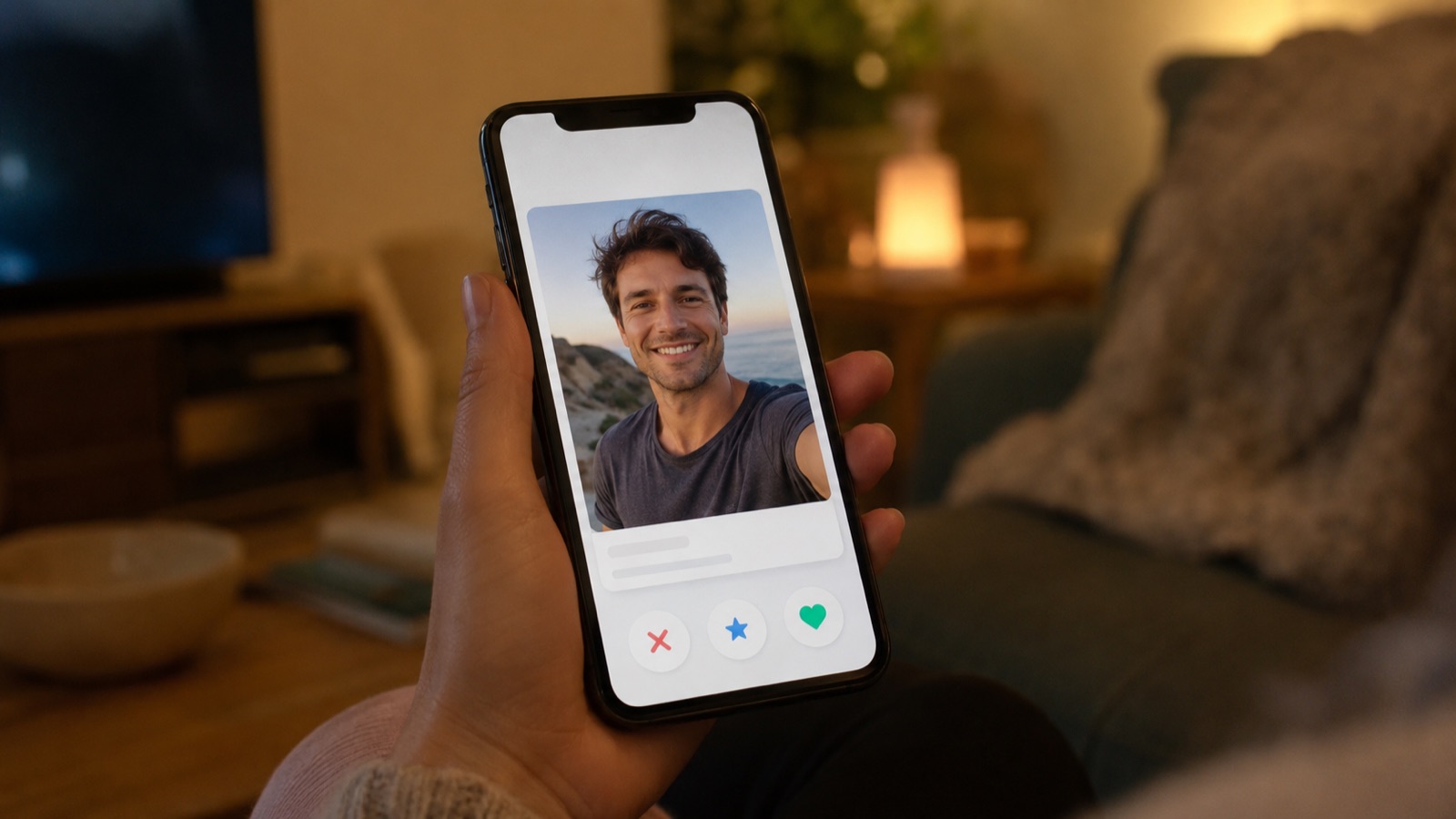
Every photo in your profile is optional except one. The first photo is the whole election — the swipe happens in under a second, on that image alone, and the rest of your profile only exists if it passes. So let's build the one photo that can't be delegated.
The formula
The best first photo on every app — Tinder, Hinge, Bumble — is the same photo:
- Your face, unmistakably. Head-and-shoulders to waist-up, from about 2–3 meters — the distance a friend across a table stands. Not a zoomed selfie-arm, not a speck on a mountain.
- Daylight. Window light, open shade, late afternoon outdoors. Ordinary light makes ordinary trust; flash and neon make skepticism.
- A genuine expression. A real smile with eye contact wins for most men. The rule is warmth, not teeth.
- A simple, real background. A cafe, a street, a wall of a place that exists — the background does half the persuasion, so give it something quiet to say.
- Nothing between her and your face. No sunglasses, no hat shadow, no motorcycle helmet, no heavy filter. Every obstruction is read as a question: what's he hiding?
The first-photo mistakes that end profiles
- The group lead — she has to solve which one you are, and she solves it pessimistically.
- The car selfie — the seatbelt portrait says "no ideas, thirty seconds."
- The bathroom mirror — worst light in the house, loneliest story in the genre.
- The distance shot — you at 40 meters on a summit is a landscape, not an introduction.
- The sunglasses lead — eyes are the trust channel; covered eyes, no verdict.
- The 2019 photo — it sets up the only failure worse than no match: the first-date face mismatch. Current beats flattering.
Why clarity beats impressiveness
The first photo's job isn't to win the profile — it's to get the profile read. Clarity passes the one-second test; impressiveness triggers the skeptic's pause — the "is this real?" squint that kills more swipes than plainness ever did. This is why the formula above is so boring: boring is what believable looks like at swipe speed. The algorithm compounds it — a lead photo that converts likes early keeps your profile shown.
Don't guess — test
You are the worst judge of your own lead photo, because you rank memories and she ranks pixels. Run two candidates a week each and compare likes and views, or put your shortlist through a stranger-vote tool — we recommend pairing creation with testing precisely because measurement beats taste.
And if the honest problem is that no photo in your camera roll fits the formula — current, daylight, 2–3 meters, real background — that's the exact gap CMeIn exists to close: a lead photo that looks like a friend caught you on a good Saturday, plus the full set behind it.